Managing Placenta Previa: A Guide for Expectant Parents
What Is Placenta Previa?
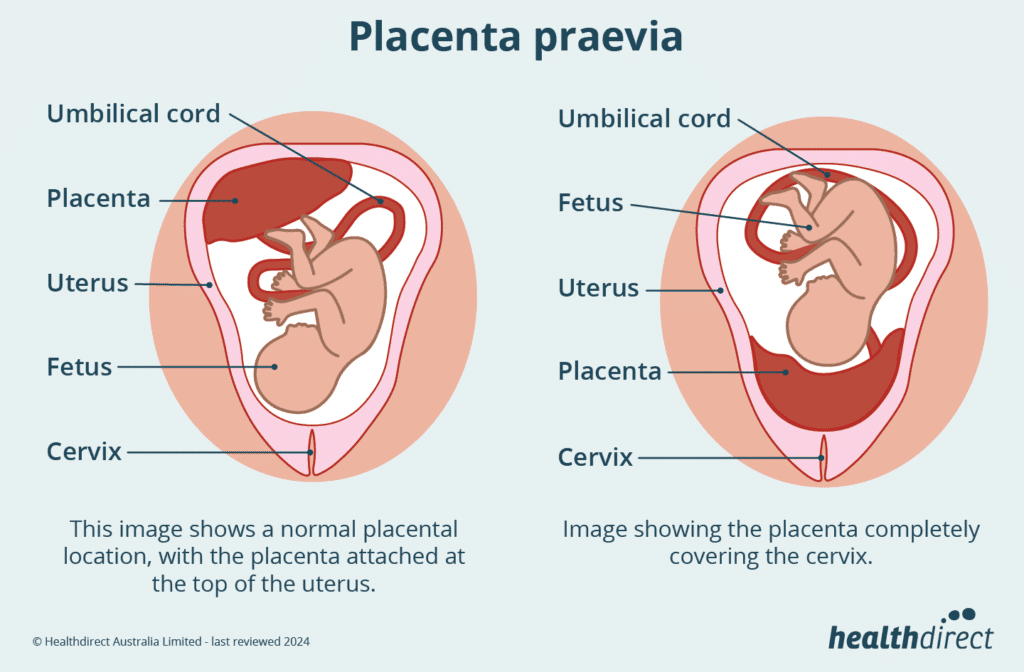
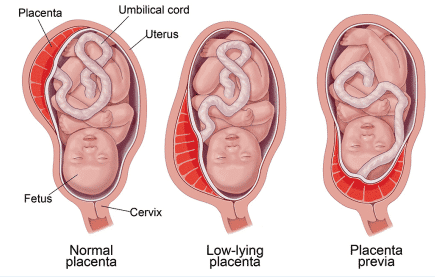
Placenta previa occurs when the placenta attaches in the lower part of the uterus, covering the cervix partially or completely. This can obstruct the birth canal, requiring careful planning for delivery. Detecting placenta previa early is crucial, and regular ultrasounds—such as during a routine nuchal scan or morphology scan—are key to early identification.[1]
What Is the Placenta?
The placenta is a temporary organ that develops during pregnancy, connecting the mother to the baby through the umbilical cord. It provides oxygen and nutrients to the growing baby while removing waste products from their blood. The placenta plays a vital role in supporting a healthy pregnancy and is crucial for fetal development.

Why Does Placenta Previa Happen?
While the exact cause isn’t always clear, certain factors may increase the risk of placenta previa: [2]
- Previous caesareans or uterine surgery: Scarring may affect where the placenta attaches.
- Age: Pregnant women over 35 are at higher risk.
- Lifestyle factors: Smoking during pregnancy can increase the likelihood.
- Multiple pregnancies: Carrying twins or more can contribute to abnormal placental positioning.
For more information about common pregnancy risks, speak with your healthcare provider and ensure all routine scans, like a morphology scan,[3] are scheduled and completed on time.
Signs and Symptoms of Placenta Previa
The most common symptom is painless vaginal bleeding during the second or third trimester.[2] If you experience bleeding, it’s essential to seek immediate medical attention and arrange a baby ultrasound to confirm the placenta’s location. This is crucial for assessing both your health and that of your baby.
How Is Placenta Previa Diagnosed?
Placenta previa is typically identified during routine ultrasounds, such as the growth scan,[4] which is often performed in the third trimester to monitor fetal development. In some cases, additional imaging like a 3D ultrasound may be used to provide clearer details about the placenta’s position, although very uncommon.
To ensure you’re getting the care you need, look for an ultrasound near me offering these services. Clinics that provide advanced imaging techniques can help monitor placenta previa and other pregnancy conditions.
Managing Placenta Previa During Pregnancy
Management strategies depend on the severity of placenta previa and whether it’s accompanied by symptoms like bleeding:[5]
- Mild cases: When there’s minimal or no bleeding, reduced activity may be recommended. Your doctor might advise avoiding strenuous activities or heavy lifting.
- Severe cases: If the placenta completely covers the cervix or if bleeding occurs frequently, a caesarean delivery is often necessary.
Regular monitoring through ultrasounds, like the growth scan, is essential to track the position of the placenta and ensure your baby’s well-being.
Why Ultrasounds Matter in Placenta Previa
Ultrasounds are crucial for monitoring placental health throughout your pregnancy. Early scans, such as the nuchal scan, help identify potential concerns early on, while detailed imaging during a morphology scan can pinpoint issues like placenta previa. Follow-up imaging, including 3D ultrasound, provides precise views to aid in decision-making.
Searching for an ultrasound near me ensures you can access these important scans without delay. Remember, your care team relies on these images to make informed decisions about your pregnancy and delivery.
Preparing for Delivery with Placenta Previa
If placenta previa persists into late pregnancy, your doctor will recommend a safe delivery plan, often through a planned caesarean section.[5] The key is ensuring that both you and your baby remain safe and healthy. Regular ultrasounds, including baby ultrasounds in the later stages of pregnancy, provide your care team with the information needed to plan accordingly.[6]
Conclusion
Placenta previa is a serious but manageable condition when detected and monitored appropriately. Routine ultrasounds—like the nuchal, morphology, or growth scan—are essential in ensuring both your safety and your baby’s health.
If you’re expecting, be proactive about scheduling your ultrasounds. Use phrases like ultrasound near me to locate clinics that offer comprehensive pregnancy imaging, including 3D ultrasound options. Speak to your healthcare provider about any concerns and ensure you’re well-prepared for a safe and healthy delivery.
Disclaimer: This blog is for educational purposes only and is not a substitute for professional medical advice. Always consult your doctor for personalized guidance and do your own research to make informed decisions.
[1] https://www.betterhealth.vic.gov.au/health/healthyliving/placenta-praevia
[2] https://www.ambulance.qld.gov.au/__data/assets/pdf_file/0026/219068/cpg_placenta-praevia.pdf
[3] https://www.pregnancybirthbaby.org.au/morphology-scan
[4] https://metronorth.health.qld.gov.au/rbwh/healthcare-services/maternity-services/tests-and-scans
[5] https://www.healthdirect.gov.au/placenta-praevia
[6] https://sydneynorthhealthnetwork.org.au/wp-content/uploads/2016/03/RCOG-Placenta-praevia-placenta-praevia-accreta-and-vasa-praevia.pdf
[title image] Taken from https://www.stela.com.au/blogs/placentapraevia
[Fig1] https://ufhealth.org/conditions-and-treatments/placenta-previa
[Fig2] https://ufhealth.org/conditions-and-treatments/placenta-previa
[Fig3] https://www.uhsussex.nhs.uk/resources/low-lying-placenta-placenta-praevia-and-placenta-accreta-after-32-weeks-2/